

Sharing Our Truth (and Why It’s So Hard)
This week marked one year since my mom died.
Over the weekend, I found myself standing in front of a group at a workshop, feeling the weight of that anniversary in my body and wondering how to acknowledge it. And even whether or not I should. As I considered whether to share what was present for me, a familiar cacophony of thoughts came rushing in:
If I cry, people will think I’m seeking attention.
If I don’t cry, will they judge me for not being emotional enough.
Come on, Gregg. Other people lose their moms too. Get over it.
Don’t make it awkward.
Don’t take up too much space.
None of these voices were bad or wrong.
They were simply protective.
They were trying to keep me safe from judgment, rejection, shame and fear of abandonment.
I chose to speak anyway.
I named the grief I was feeling.
I named the stories that were trying to stop me.
I named how uncomfortable it felt to stand there not knowing how it would land.
I cried and I shook.
It was emotional.
It was uncomfortable.
And it was freeing.
Not because anything magical happened.
Nothing was fixed.
The grief didn’t disappear.
I didn’t walk away “healed.”
It was simply another step in the journey.
I felt relieved, and I was also exhausted. Telling the truth can be both regulating and draining at the same time. I wasn’t sharing to solve my grief.
I was sharing so I didn’t have to carry it alone.
I wanted to be understood. I wanted to let the stories inside me have some air. I wanted to remember that these stories aren’t mine alone, they’re part of our shared humanity.
Brené Brown says that people earn the right to our vulnerability. That distinction matters.
Sharing our truth doesn’t mean sharing everything, everywhere, with everyone. Discernment is part of self-respect and self care. Safety matters. The work isn’t to tell our truth to everyone, it’s to listen inwardly and sense where it’s safe enough to be real. And to have boundaries where it’s not.
There’s a double bind many of us live inside:
If we stay silent, we protect ourselves from judgment, but we lose connection.
If we speak, we risk being misunderstood, and sometimes we find relief.
There’s no perfect way to do it. No guaranteed outcome. And we don’t have to risk everything at once.
I was grateful afterward with how many people shared that my words had been meaningful for them. Not because my story was special, but because it gave language to things they carry too. The fear of being too much. The worry about taking up space. The grief that doesn’t look the way it’s “supposed” to.
The stories that try to silence us live in all of us. It’s a part of being human, but we don’t have to hide it, even if it feels like we do. We also don’t have to share it.
Sharing our truth isn’t about being dramatic, polished, or brave. It’s about letting ourselves be seen as human. Sometimes that means speaking. Sometimes it means choosing not to. Both can be acts of care.
What stories keep you from sharing your truth?
Who would you be if you didn’t have to manage how your pain looks?
What truth wants to air right now, even if just a little?
You don’t have to answer right now. Just notice what arises, whether thoughts or sensations.
If there’s a truth in you that wants to be spoken, it doesn’t need an audience. It needs enough safety. It might be shared with one person. Or written in a journal. Or simply acknowledged quietly inside.
And if today isn’t that day, that’s okay too.
You're not broken for wanting to hide. You’re not weak for wanting to be seen.
Healing rarely comes in a single moment. More often, it happens in small, honest steps toward not being alone anymore.
The object isn’t to tell our truth to everyone but rather to listen inwardly and sense where it’s safe enough to share what’s alive in us. This work for me is about supporting people to take these steps in whatever ways feel safe, human and honoring of their nervous systems.
If you’re navigating grief, self doubt, or the fear of being too much or not enough, you don’t have to do it alone.
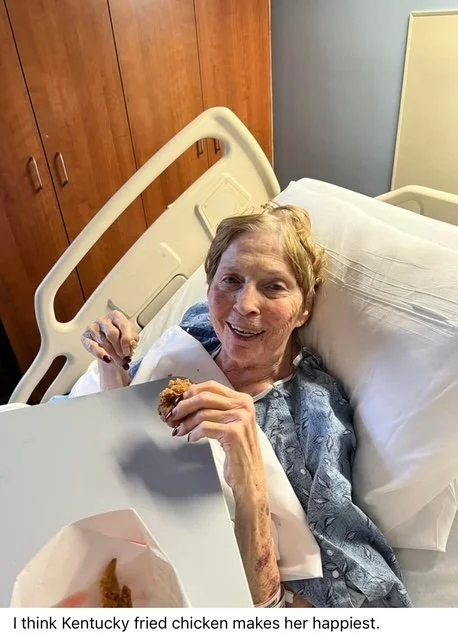
“Grief is the price we pay for love.”
— Queen Elizabeth II
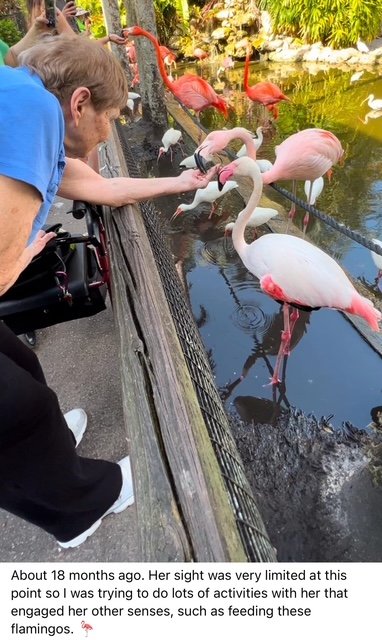
“The reality is that you will grieve forever. You will not ‘get over’ the loss of a loved one.”
— Elisabeth Kübler-Ross
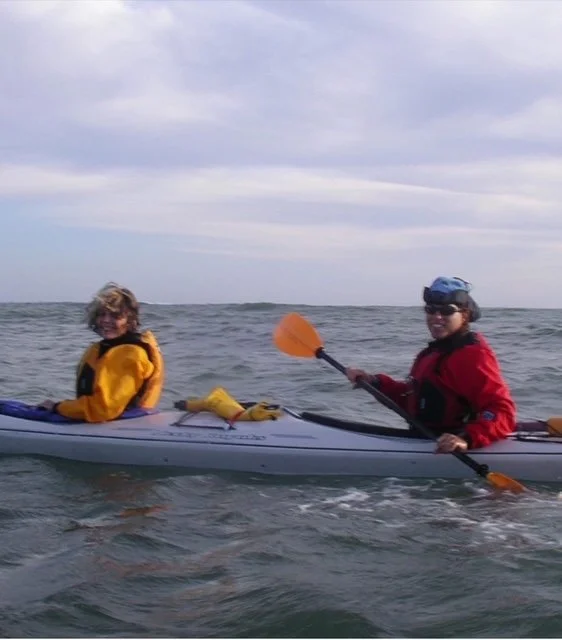
Kayaking with my in Half Moon Bay on her only visit to California shortly after I moved out here 20+ years ago. I'm so thankful for this photo because I was thinking I had never gotten to share this thing that has been such a big part of my life. I'm grateful to see, in fact we did share some time on the water.
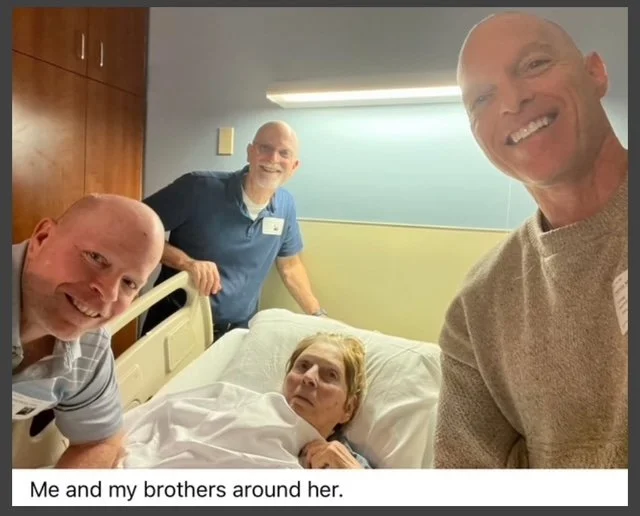
In her final weeks.
"Thank you for your care. I miss you Mom."
— Gregg Berman